The 8th annual Chicago Festival of Bosnian-Herzigovinian Film was another smashing success for Bosnian cinema and proved once again that BiH is one of the best countries on earth for film making and filmmakers. Bosnia has a long rich tradition of film making that goes back a long time. Like everything in Bosnia it suffured during the war and has recently had a resurgence in film making in the country.
This years film festival had just the right mix of Documentaries, featured films, tears and laughs. Always interesting and always compelling it is impossible to sit and watch films for 10 hours, yet here I was glued to my seat and compelled to see every last one of them.
I am including besides the synopsis a short review and grading of the film on a scale of 1-10 with 10 being the highest.
ESMA
Documentary. Director: Alen Drljevic. 2007. 26 minutes.
In 1995, during official negotiations inside a UN protected area in Zepa, the Bosnian Serb Army abducted Colonel Avdo Palic, the Bosnia and Herzegovina Army negotiator. As of then, begins the long search by his wife, Esma, for her missing husband.
The sad and compelling story of widow Esma Palic who has been searching for her husbands remains since he went missing while negotiating the surrender of the Eastern UN safe Area of Zepa after neighboring town Srebrenica fell and Genocide was committed in 1995. Avdo wanting to avoid the same fate for the people he was in charge, that befall the civilians of Srebrenica, Avdo agreed to negotiate the surrender of the enclave in person with Ratko Mladic. Mladic guaranteed his safety, yet when the negotiations were over Avdo was killed and dumped into a grave. The film shows Esma search for her husbands mortal remains and her search for justice. The story is a reminder of the injustice of the internationally community and the lack of regard for international law shown by the Bosnian Serbs. It also reminds you of the case of Bosnian Prime Minister Hakija Turajlic, who was pulled out of UN Armored Personnel carrier in front of French troops and shot dead. The French peacekeepers made no attempt to intervene except to allow the killers access to him and then to allow the killer to escape. No one has ever been held accountable for either case. Palic remains were found in 2001 but were never identified until 2009.
GRADE: 8.0
THE BRIDGE
Documentary. Director: Haris Bilajbegovic. 2010. 11 minutes.
Based on true events, this short film covers the story of a father forced to leave behind his son at a bridge never to see him again. Thirteen young men lost their lives on that ominous day.
A harrowing tale that was a reenactment of an incident from the start of the war when Bosnian Serb soldiers executed a group of men on a bridge, their only crime not being Serb.
GRADE: 7.0
THE WITNESS
Documentary. Director: Haris Bilajbegovic. 2012. 42 minutes.
“The Witness” is a visually powerful interpretation and dramatization of Raif Begic’s experience during the war in Bosnia-Herzegovina. It is a film about the bravery of a survivor who is not afraid to tell his story as a key witness at the Hague Tribunal as well as at the Superior Court of Bosnia and Herzegovina against soldiers of the Army of Republika Srpska, later found guilty of war crimes.
The story of the courage of one survivor of another massacre on another bridge, a story and scenario repeated hundreds of times in the war in Bosnia, except this time someone survived and showed the courage to face his tormentors in the Hague.
GRADE: 7.0
A CELL PHONE MOVIE
Documentary. Director: Nedzad Begovic. 2011. 60 minutes.
A spontaneous, entertaining, and emotional ‘spy story’ of the director's daily routine. The author is searching for fields of artistic freedom within the limits of a cell phone. He, in fact, uses the ‘voice record’ option saving his daily telephone conversations. The idea is that the film is realized as expressly minimalistic, in elementary form, without regard to rules of classic film expression.
One of the best filmmakers in Bosnia pushes the boundaries of film making and makes a film with a cellphone. It raises the question of what is art and what will be considered film in the future.
GRADE: 5.0
MIRZA DELIBASIC - BASKETBALL LEGEND
Documentary. Director: Miro Benkovic, 2012. 85 minutes.
This is a story about the most successful Bosnian basketball player Mirza Delibašić. The film is an objective, but also intimate story about a man who marked the Bosnian sport scene. Besides archive footage, the film shows Mirza’s friends, people who knew him personally, and his family.
As a huge basketball fan and a fan of Mirza Delibasic this film left me with a lot of wanting in the end. Mirza had a compelling story and a compelling life but this left a lot to be desired. Poorly constructed and organized it was also poorly edited. It never told his story in any order and lacked cohesion and sequence. It was not worthy of the person or the story it was trying to tell.
GRADE: 3.0
THREE DAYS
Documentary. Director: Zdenko Jurilj, 2011. 81 minutes.
An hour and a half after midnight, on May 6th 1991, the commander of the 4th Cropus of JNA general-major Milovan Zorc received a secret dispatch from the supreme command in Belgrade (Serbia), where he was ordered to move a part of the 10th Armoured mechanized brigade from Mostar (Bosnia and Herzegovina) and join it to the rest of the tank units in Sinj (Croatia). A long tank column, equipped with the battle shells and the soldiers draftees, who got the rifles and guns with live ammunition for the first time while being in the military service, set off in the early morning on May 7th 1991 from Mostar towards Sinj. 15 kilometers away from Mostar, the tank column came across the kilometers long barricade formed out of civilians and heavy trucks and passenger cars. While the verbal conflicts were lasting, passing over in the commanding chain of JNA the information came to the frightened soldiers in the tanks, composed out of all of the nations from the territory of former Yugoslavia, who didn’t even know where and why they were actually heading with the live ammunition, that they would have to use the firearms for the first time. The films enters the innermost feelings of the people in the bureaucratic offices, enters the souls of the commanders, soldiers, civilians! Through the feature film scenes, authentic takes, statements, radio and newspaper reports, the film “3 Days,” shows the chaos, the suspense, the fears that dominated among the people from both sides of the barricades on the eve of the beginning of Yugoslavia’s falling apart.
One of the most interesting stories never told from the Bosnian war. The most interesting part was the sight of Bosnian Croats in one of the most Croat Nationalist town in Bosnia (Siroki Brijeg) cheering for and wanting to see Alija Izetbegovic. It really showed that the course of events before, during and after the war could have been much different.
GRADE: 9.0
SOME OTHER WORLD*
Documentary. Director: Mustafa Hadziibrahimovic & Naida Ribic, 2012. 59 minutes.

Is a documentary film conceived as an intimate portrayal of the Turkish Halilbeyli village and its residents. Halilbeyli is approximately 40 kilometers from the Turkish coastal city of Izmir. Besides the Turkish language, the majority of the 2,300 people living in the village also speak an old variant of the Bosnian language. Hallibeyli was founded by Bosniaks, predominantly from the Herzegovina region, who moved to the area during the 19th century. To this day, the descendants of these settlers maintained their language, culture, and customs. They represent a time which has disappeared, or is slowly fading away. The movie depicts an authentic picture of the life of Turkish citizens whose roots are mainly in Bosnia and Herzegovina.
An interesting story of Bosnians who fled BiH after the Ottoman Empire left and the Austro-Hungarian empire moved in at the turn of the 20th century. It raises the question of how to preserve identity in a changing world, especially with the young. It also begs the question of why so few Bosnians identify as such around the world in contrast to their neighbors the Serbs and Croats.
GRADE: 7.0
CHILDREN OF SARAJEVO
Feature. Director: Aida Begic, 2012. 82 minutes.
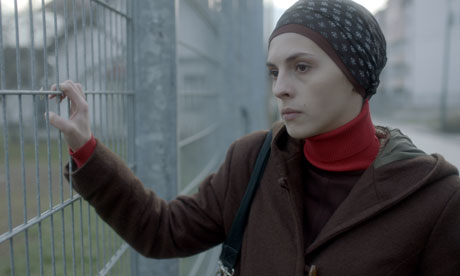
Rahima (23) and Nedim (14) are orphans of the Bosnian war. They live in Sarajevo, a transitional society that has lost its moral compass, including the way it treats orphans whose parents were killed fighting for the freedom of their city. After her crime-prone adolescent years, Rahima has found comfort in Islam and she hopes her brother will follow in her footsteps. Their life of bare survival becomes even more difficult after Nedim gets into a fistfight with the son of a local strongman and breaks his expensive mobile phone. This incident triggers a chain of events leading Rahima to the discovery that her brother leads a double life.
Another compelling feature film from young filmmaker Aida Begic. This film raises troubling questions of young people struggling in postwar Bosnia. It also raises questions about struggling poor here in the US and how they deal with it.
GRADE: 7.0

